
Jan 27th 2026
Evolution of Solar Energy Systems for Electricity
Solar energy was once considered a fringe science experiment—a costly and inefficient alternative reserved for space satellites and remote outposts. Today, it stands as the fastest-growing source of new electricity generation in the United States. For industry leaders and large-scale developers, understanding this trajectory isn't just a history lesson; it is the key to predicting where the market goes next.
Rapid technological leaps and dramatic cost reductions have defined the journey from the discovery of silicon to gigawatt-scale solar farms. As grid parity becomes a reality in more regions, the focus has shifted from whether solar works to how we can optimize it for maximum yield and stability.
Let’s explore the critical milestones in the evolution of solar energy systems for electricity and their implications for the future of large-scale solar deployment.
The Early Days: Photovoltaics Find Their Footing
While the photovoltaic effect was discovered in the 19th century, practical application didn't truly begin until Bell Labs produced the first silicon solar cell in 1954. These early iterations were inefficient—converting only about 6 percent of sunlight into electricity—and prohibitively expensive.
For decades, the primary customer for solar technology was the space industry. The Vanguard 1 satellite, launched in 1958, was the first to use solar power, proving that PV cells could provide reliable energy in harsh environments. However, the cost per watt was astronomical, making terrestrial applications unfeasible for anyone but the most specialized users.
It wasn't until the 1970s energy crisis that governments began pouring resources into renewable energy R&D. This era birthed the first dedicated efforts to lower manufacturing costs and improve efficiency, laying the groundwork for the commercial market we operate in today.
The Efficiency Race: Monocrystalline vs. Polycrystalline
For years, cost and performance considerations dominated the solar market. This dynamic drove the development of the two primary cell technologies that utility-scale developers rely on.
Polycrystalline Silicon (Poly-Si)
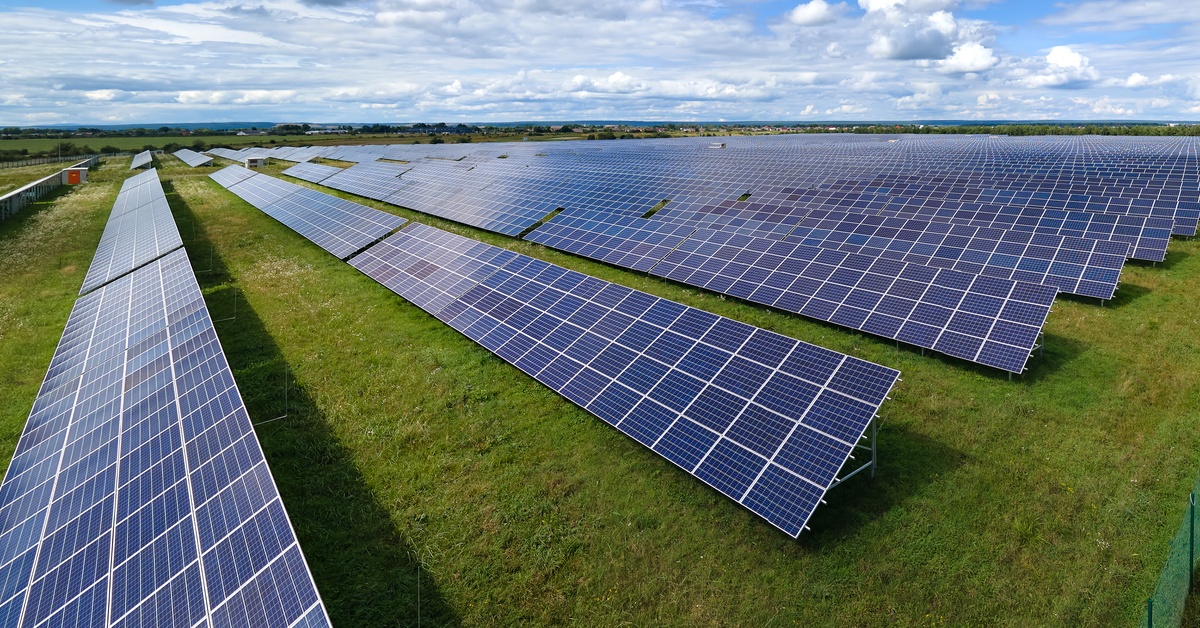
Recognizable by their blue, speckled hue, polycrystalline panels were the workhorse of the early 2000s boom. They were cheaper to manufacture because the manufacturers melted and poured the silicon into molds, resulting in less waste. For large-scale projects where land was cheap and upfront capital was tight, "Poly" was the standard.

Monocrystalline Silicon (Mono-Si)
Made from single-crystal silicon ingots, these panels are uniform in color (usually black) and offer higher efficiency rates. Historically, they were significantly more expensive to produce.
However, the introduction of PERC (Passivated Emitter and Rear Cell) technology changed the game. PERC cells added a reflective layer to the back of the cell, capturing more light and boosting efficiency without a massive cost increase.
Today, the price gap between Poly and Mono has narrowed so drastically that Monocrystalline PERC modules have effectively taken over the utility-scale market. For developers, this shift means generating more power per acre, reducing balance-of-system (BOS) costs, and maximizing land-use efficiency.
The Balance of System (BOS) Revolution
While panel efficiency grabs the headlines, the evolution of the Balance of System (BOS)—everything but the panels—has been equally critical for large-scale operations.
Inverters: From Central to String
In the early days of solar farms, massive central inverters were the norm. They were cost-effective but introduced a single point of failure: if the central inverter failed, a large section of the array would go dark.
The industry has seen a gradual shift toward high-capacity string inverters for utility projects. String inverters offer better granularity in Maximum Power Point Tracking (MPPT), meaning shade or debris on one row doesn't disproportionately drag down the output of the whole system. This evolution allows for easier maintenance and higher overall system uptime.
Racking and Tracking
Fixed-tilt racking systems are simple and reliable, but they leave energy on the table. The widespread adoption of single-axis trackers has revolutionized yield profiles. By following the sun from east to west, trackers can increase energy production by 20 to 30 percent compared to fixed-tilt systems.
Modern trackers are now integrating with AI software to account for backtracking (preventing rows from shading one another) and diffuse lighting conditions. For large-scale businesses, the ROI on trackers has become undeniable in most latitudes.
The Storage Paradigm: Solar and Storage
Perhaps the most significant evolution in recent years is the transition from standalone solar generation to hybrid solar and storage plants.
Intermittency has always been the Achilles' heel of renewable energy. Grid operators demand dispatchability—the ability to provide power exactly when it is needed, not just when the sun is shining. The plummeting cost of Lithium-Ion batteries has made co-location (pairing solar with battery energy storage systems, or BESS) financially viable.
This evolution unlocks new revenue streams for solar businesses, such as:
- Energy arbitrage: Storing solar energy during midday when prices are low and selling it during peak evening hours
- Ancillary services: Providing frequency regulation and voltage support to the grid
- Capacity firming: Smoothing out the ramping of power output during cloud cover
The Future: Bifacial Modules and Beyond
We are currently witnessing the rapid standardization of bifacial modules. Unlike traditional monofacial panels with an opaque backsheet, bifacial panels capture sunlight on both the front and the back (reflected from the ground, or albedo).
Depending on the ground surface, bifacial modules can boost energy generation by 5 to 15 percent with minimal additional manufacturing cost. When paired with single-axis trackers, the economics become even more attractive, driving down the Levelized Cost of Electricity (LCOE) to historic lows.
Looking further ahead, Perovskite tandems represent the next frontier. By layering Perovskite materials on top of silicon, researchers are achieving efficiencies well beyond the theoretical limit of silicon alone. While stability issues remain a hurdle for mass commercialization, this technology promises to be the next leap forward for the industry.
Why Staying Ahead Matters for Your Business
The solar industry does not reward stagnation. The components that were industry-standard five years ago are now obsolete. For large-scale solar businesses, understanding the evolution of solar energy systems allows you to look forward and prepare for innovations.
Investing in outdated technology to save pennies on upfront costs often leads to millions in lost revenue over the 25+ year lifespan of a project. Conversely, adopting proven innovations—like bifacial trackers or intelligent storage integration—can significantly improve project bankability and internal rates of return (IRR).
In addition to using innovative technology, your solar panels should also include electrical solar placards to identify key electrical components and note safety requirements for your project. At Get Solar Labels, we offer high-quality placards for a wide range of solar projects. From micro solar grids to solar farms, you can find exactly what you need, with a quick turnaround to deliver it as fast as possible.